

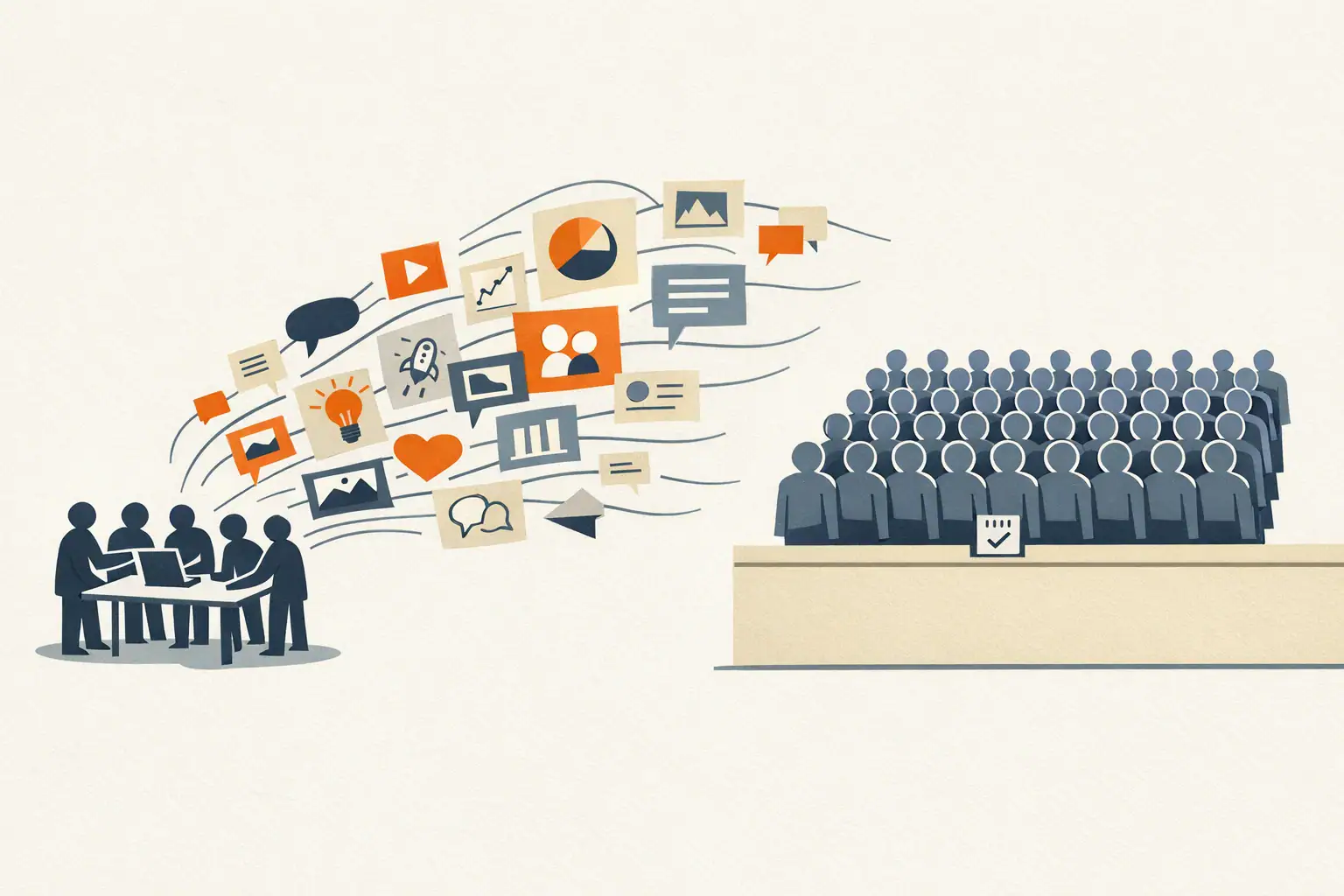
Liquid Death’s in-house creative team is five people. They’ve built a $1.4 billion brand with more than 14 million social followers, and they ship marketing that consistently embarrasses companies a hundred times their size. They recently ran an experiment everyone in marketing should be paying attention to: an $800 AI-generated ad that outperformed 75% of water-category commercials in a comparison database, with 85% of viewers correctly identifying the brand without seeing a logo. A five-person team and an $800 spend, beating agency-produced ads from companies with nine-figure marketing budgets.
This isn’t a story about an unusually weird brand getting lucky. It’s a story about a marketing operating model that was already designed for the AI era, built before the AI tools were here. Now that the tools have arrived, the Liquid Death playbook is the manual every lean team should be reading.
I don’t work at Liquid Death. What follows is a teardown built from public interviews with founder Mike Cessario, the team’s own commentary, observable output, and reporting from outlets covering the brand. The pattern is consistent enough across sources that I’m confident in the read.
The five-person miracle, by the numbers
Liquid Death’s creative organization, per public reporting, looks like this:
- A five-person in-house creative team that functions like a writers’ room
- Roughly twelve freelance comedians on a “comic ambassador” retainer for punch-up and additional creative
- A growing roster of celebrity collaborators (Tony Hawk, Travis Barker, Steve-O, others) who participate in stunts
- All of it producing the volume of content you’d normally see from a thirty-person agency
That’s the org chart. The output is everywhere: TikTok, Instagram, billboards, retail end-caps, paid spots, brand collaborations that get covered as news. Cessario has been explicit in interviews that the brand is “first and foremost a content creation company,” with the physical product secondary to the content engine. The implication of that framing matters: Liquid Death’s structure is closer to a YouTube studio than to a beverage company. The most important thing about a content studio is its content velocity, not its headcount. And AI changes content velocity more than it changes anything else in marketing.
The “dumbest idea” filter
Cessario’s most-quoted creative principle is to chase “the dumbest idea in the room.” His logic, in interviews: smart ideas are the ones every other brand is already pursuing. By definition, a smart idea isn’t differentiated. The only way to break out is to find the idea that sounds wrong to a typical marketer and ship it anyway.
Examples from the public record: skateboards screen-printed with Tony Hawk’s actual blood. An enema kit collaboration with Travis Barker. NFTs of melted plastic monsters that mocked NFT culture itself. A brand that markets canned water like death metal beer.
Most marketing teams filter ideas through risk. Liquid Death filters them through distinctness. The distinct idea will sound dumber on paper than the safe one almost every time, which is exactly why it’s the one to ship.
A five-person team can only manually generate so many “dumb” ideas before the well runs dry. AI is a useful sparring partner here. Not as the source of the idea, but as a way to push variations on a kernel and stress-test what’s been done before. “I’m thinking of doing X. List 30 stranger versions of X” is the kind of prompt that pays for an entire model subscription in a single afternoon.
Pre-product marketing was the original lean-startup hack
Cessario’s founding move, per his own retelling, was to make a fake commercial for Liquid Death before the product existed. Three-D rendering of a tallboy can with skull branding, mock video ad on Facebook, no actual canned water. The video went viral, racked up millions of views, and produced enough engagement data to raise seed funding.
He sold the marketing first. The water came later.
This is a more important pattern than people give it credit for. Most founders ship a product and then figure out marketing. Liquid Death shipped marketing and figured out the product. In a category where the product is functionally identical to a hundred competitors (it’s water), the only thing that mattered was whether anyone cared.
For an AI-native operator, the move to steal isn’t to ship fake products. It’s to use AI to prototype the marketing position before sinking resources into the product. Eight hundred dollars and a weekend can produce three brand-positioning concepts, three sample ads, three landing-page mocks, and enough content to test reaction in the market, all before you commit to the version of the product you’re going to build. Cessario did this with traditional production tools and it took him months. You can do it now in a weekend.
Comedy is a competitive moat that big brands can’t cross
Cessario has been direct about why Liquid Death leans on comedy: it’s hard for incumbents to do. Coca-Cola can’t run an ad about an enema kit. They can’t sell skateboards made of blood. The board will not approve it. The risk team will not approve it. The brand-safety vendors will not approve it.
That space the big brands have abandoned is the moat. Comedy lives there because the cost of a misfire for a Coca-Cola is higher than the upside. A scrappy challenger has the opposite math: low cost of a miss, total cost of being ignored, brand-defining upside on a hit. So they swing.
The thing AI changes about this isn’t whether you can be funny. That’s still a human skill. What changes is how many comedy variants you can prototype per week. Sketch comedy used to require writers’ rooms, performers, and production crews. A two-person team with AI can now produce ten short-form comedy concepts a week, test them against an audience, and double down on what hits. The Liquid Death cadence used to require their kind of headcount. Now it requires taste plus tools.
The “small bets” cadence is where AI compounds
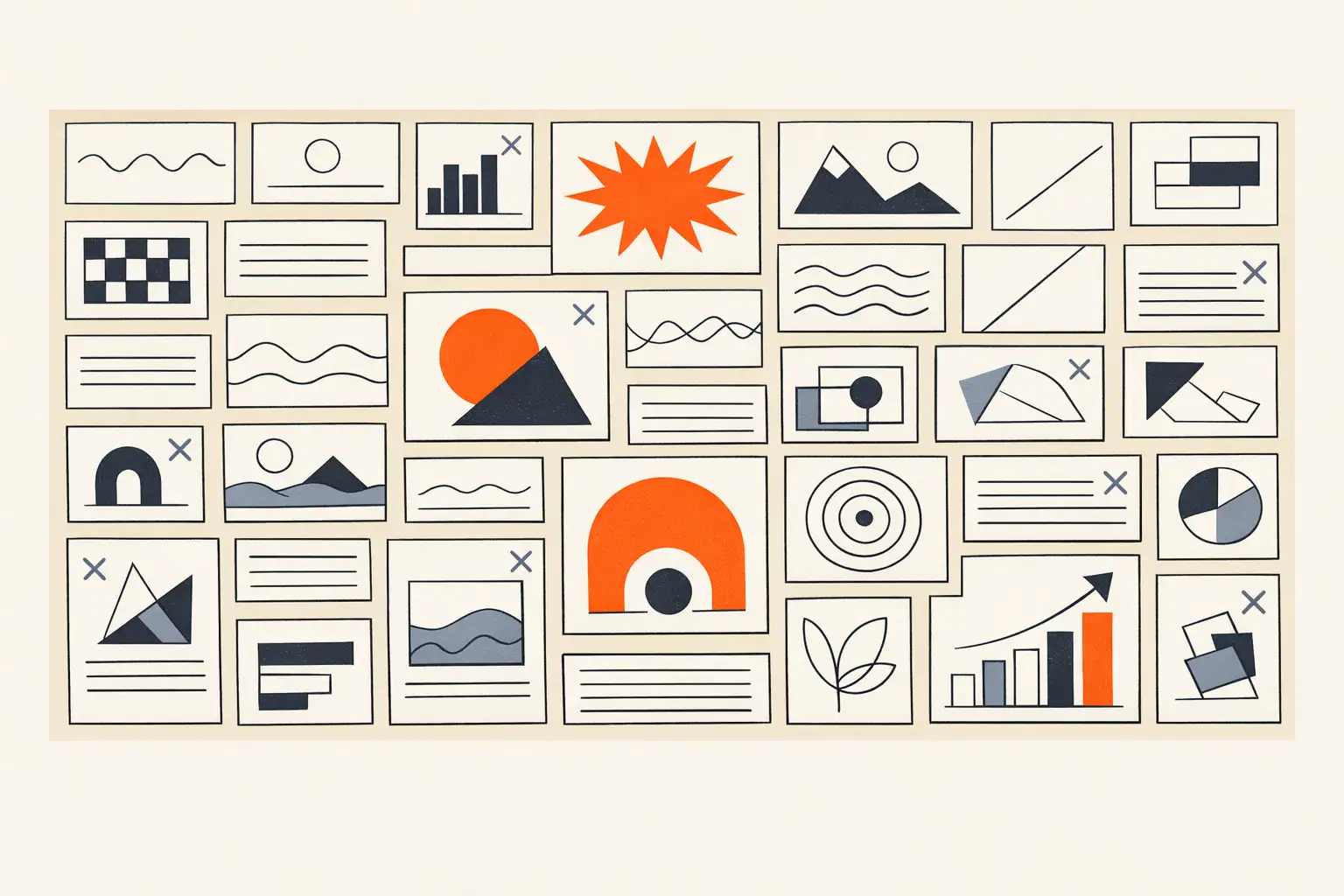
Cessario calls Liquid Death’s approach a “small bets” model: high volume of cheap-to-produce content, fast feedback from social, double down on what resonates. That’s exactly the workflow AI is best at amplifying.
A traditional creative team of twenty-five might be able to run five concept tests per week, each requiring days of production. A five-person team augmented with AI tooling can run thirty in the same window, with text variants, visual variants, hook variants, format variants, and let real audience response do the selection. The team’s job becomes less about producing each piece and more about reading the feedback faster and choosing what to scale.
This is also where the $800 AI ad fits. The point of a generative-AI ad isn’t that it replaces traditional production for your hero spots. The point is that it lets you produce ten more competing concepts at marginal cost, ship them all, and find out which one moves the needle. Liquid Death’s instinct is to test, not to perfect. The instinct of most legacy brands is to perfect, then test. Volume beats polish in attention markets, and AI multiplies the volume side of that equation.
Three things to steal from this
1. Make the marketing before the product. For your next initiative, spend a weekend producing the marketing as if the product were already done. Generate three concepts, three sample ads, three landing pages, three social posts. Show them to your audience, your friends, your cohort. If nobody reacts, your product idea has a marketing problem you’ll discover in six months at much higher cost. AI makes this experiment effectively free.
2. Run small bets weekly. Pick one campaign hook. Generate ten variants. Ship them all. Measure response. Kill the eight that don’t work. Compound on the two that do. Most marketing teams treat each campaign as a single artifact to perfect. Liquid Death treats every campaign as a portfolio of experiments. This pattern is much easier to run with AI than without.
3. Build comedy capacity, not comedy. You don’t need to be funny on demand. You need a system that surfaces, prototypes, and tests funny concepts faster than your competitors. That’s a different skill, and AI tooling actually accelerates it. The two-person operator who builds a “comedy production rig” of prompts, references, and feedback loops will outproduce a five-person creative team that’s still trying to write everything by committee.
Where this breaks
Liquid Death’s playbook works because the brand is structurally allowed to be weird. Cessario built it that way from day one. If you’re operating inside a brand that already has guardrails (regulated industry, enterprise audience, legacy brand equity to protect), you can’t drop straight into the dumbest-idea filter. The cost of a misfire is too high.
The adaptation: keep the small-bets velocity, but tighten the band. Instead of “swing for the absurd,” it becomes “swing for the unexpected within bounds you’ve pre-defined.” You still get the AI-driven volume advantage. You just trade some of the upside for protection against blowing up the trust you’ve built.
For most early-stage operators reading this, that caveat doesn’t apply. You’re closer to Cessario at the start than you are to a Fortune 500 brand manager. The dumbest-idea filter is available to you in a way it isn’t to them. That’s an advantage worth using while it’s still yours.
The broader lesson
What Liquid Death proves, more clearly than any case study I’ve seen recently, is that creative throughput beats creative budget in attention markets. A five-person team that ships forty pieces a week will outperform a forty-person team that ships five. The math on that has always been there. What’s new is that AI has made the throughput model accessible to anyone with taste and reflexes, not just to a brand structured around it from day one.
The structural insight isn’t that you should be Liquid Death. The insight is that you no longer need to be Liquid Death-sized to ship Liquid Death-quantity-of-content. The model is portable now in a way it wasn’t a year ago.
If you’re building the operator side of an AI-native marketing team and want a concrete picture of what the stack looks like, here’s the two-person version. For the team-design question of who you actually hire and how the org chart looks, the breakdown is here. And for a different read on a brand using AI very deliberately, the Duolingo teardown is here.
FAQ
Does Liquid Death actually use AI in their marketing? Yes. They’ve shipped at least one widely-discussed AI-generated ad that performed unusually well in benchmark testing. Beyond that specific spot, they haven’t published a detailed AI workflow document. Most of what they do is human-led creative with AI as an assist, but the exact ratio isn’t public.
Could a small team really replicate this? Replicate the structure, yes. Replicate the brand, no. Liquid Death’s brand was built over years by a founder with strong creative instincts. What’s transferable is the operating model: small in-house team, freelance creative bench, content velocity over content perfection, distinctness as the filter for ideas.
What’s the right starting point if I want to try this? Pick one campaign. Generate ten variants with AI. Ship them. Watch what happens. Don’t try to overhaul your whole content operation in week one. The Liquid Death pattern is “many small bets, weekly, forever.” That cadence is what compounds.
