

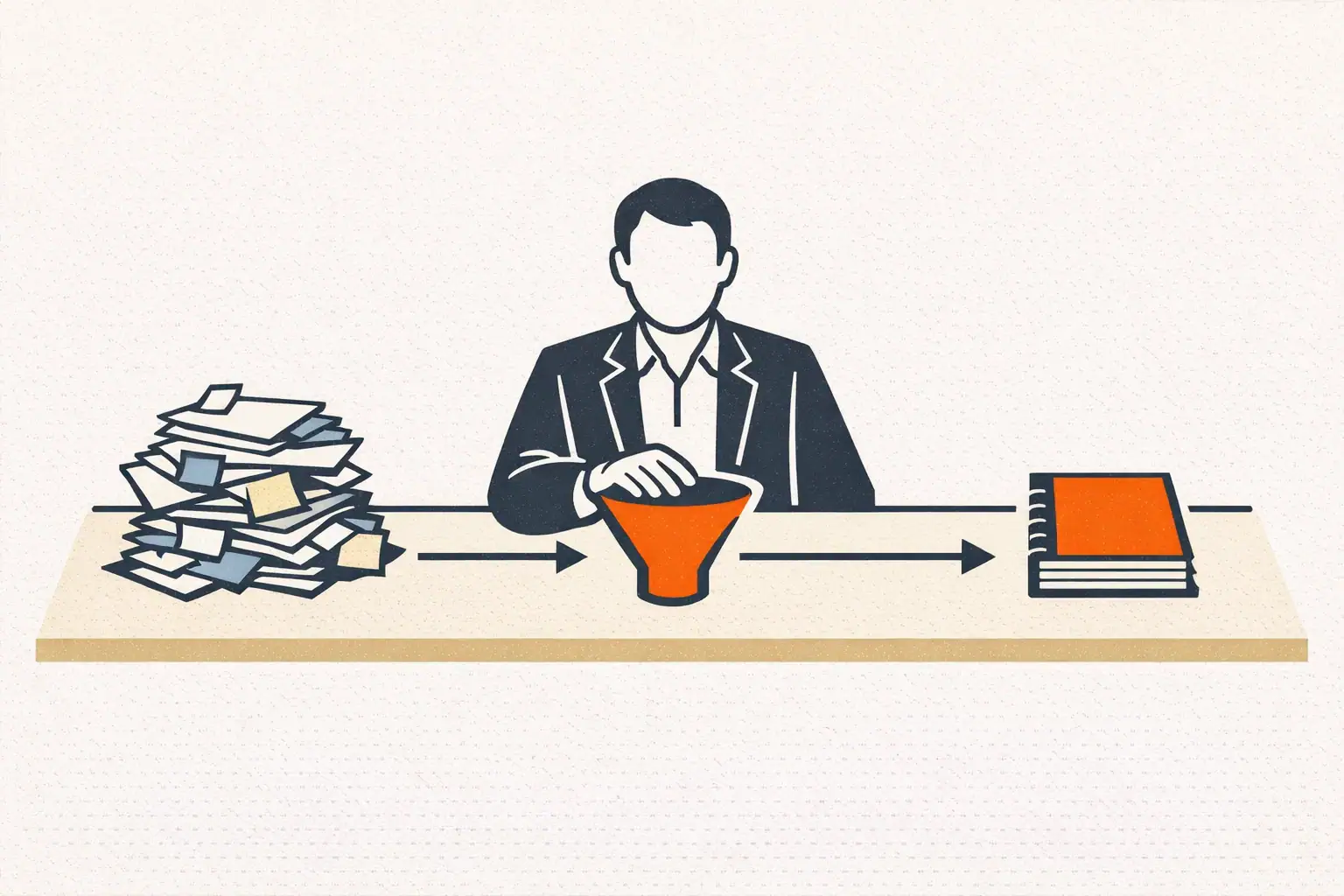
Consultants don’t just need faster writing. They need faster movement from messy inputs to useful deliverables.
That’s why Hermes Agent is worth watching.
Hermes is an open-source AI agent framework from Nous Research. It runs in the terminal, messaging platforms, and connected tool environments. Depending on setup, it works with files, web research, browser actions, schedules, memory, messages, and command-line tools. The official Hermes docs are here if you want to dig into the technical layer.
For consultants, the value isn’t that Hermes writes a prettier paragraph. The value is that it can help turn scattered information into structured client work. If you haven’t installed it yet, our setup guide walks through the VPS, model provider, and tool decisions step by step.
The consultant bottleneck is usually synthesis
Most consulting work starts messy.
You have call notes, spreadsheets, website pages, analytics screenshots, customer interviews, competitor tabs, emails, PDFs, old strategy docs, and a client who wants a clear recommendation by Friday.
The hard part isn’t typing the final deck or memo. The hard part is synthesis:
- What matters?
- What’s repeated across sources?
- What contradicts the client’s current belief?
- What’s missing?
- What can we recommend with confidence?
- What should wait until we have more evidence?
Hermes can help with the mechanical parts of synthesis. It gathers, groups, summarizes, compares, and drafts. The consultant still owns the judgment.
Workflow 1: client discovery synthesis
After a discovery call, a consultant usually needs to turn conversation into a working brief.
Hermes can help process:
- Transcript highlights
- Client goals
- Constraints
- Stakeholders
- Open questions
- Mentioned competitors
- Promised follow-ups
- Potential project risks
A useful output isn’t just a call summary. It’s a project brief that says what we heard, what we think it means, and what we need next.
Zoom and Google Workspace both provide transcripts depending on account setup. The consultant should still review the transcript: AI transcription and summarization can miss nuance, especially when people are vague, political, or contradictory.
Workflow 2: website and marketing audits
Consultants often audit websites, funnels, positioning, content, SEO, or paid campaigns.
Hermes can help create a repeatable audit workflow:
- Pull the website sitemap.
- List important pages.
- Extract titles, meta descriptions, headings, and page themes.
- Compare the site to the client’s stated positioning.
- Identify missing service pages or weak calls to action.
- Draft a prioritized recommendations memo.
For SEO-specific audits, Google Search Central is still the reference point. For analytics, Google Analytics and Google Search Console are usually the baseline tools.
Hermes can move through the audit checklist. It shouldn’t be the final authority. The consultant decides which issues matter commercially.
For the broader operating context that makes audit work scalable across multiple clients, our piece on the role of an AI marketing consultant covers what the design layer actually looks like.
Workflow 3: competitor teardown briefs
Competitor research is another place where agents help.
A consultant might ask Hermes to collect competitor homepages, pricing pages, service pages, ads, blog topics, and positioning language. Then Hermes groups the patterns:
- Common promises
- Differentiation gaps
- Repeated objections
- Pricing signals
- Content themes
- Messaging clichés
- Opportunities to sound different
Useful because competitor research often dies in browser tabs. Hermes turns the tabs into a brief.
We use a similar teardown mindset across our content, including our Duolingo social media teardown and our Liquid Death marketing playbook teardown.
Workflow 4: first-draft client deliverables
Hermes can help draft:
- Audit memos
- Workshop agendas
- Strategy briefs
- Implementation plans
- SEO content plans
- Weekly client updates
- Executive summaries
- Follow-up emails
The first draft isn’t the deliverable. It’s the clay.
That distinction matters. Consultants shouldn’t send AI output just because it’s coherent. The value of consulting is perspective, taste, prioritization, and the ability to tell the client what not to do.
Hermes speeds up the draft. The consultant makes it worth reading.
Workflow 5: recurring client reporting
Reporting is full of repeated structure.
Every week or month, the consultant explains:
- What changed?
- What shipped?
- What did we learn?
- What’s blocked?
- What should happen next?
Hermes can produce the first pass from notes, analytics exports, task lists, and prior reports. That saves time, but more importantly, it creates consistency.
A good report doesn’t just list metrics. It tells the client what the metrics mean.
For the broader AI-assisted operating model that makes recurring reporting scalable, our piece on the 2-person AI marketing team covers what one operator can credibly deliver across clients.
Why Hermes instead of a normal chatbot?
A normal chatbot is great when everything fits inside the conversation.
Hermes becomes more interesting when the workflow touches files, websites, messages, schedules, and repeatable procedures. A consultant can build a reusable workflow once and run variations of it for future clients.
For example:
- “Run the standard website-audit workflow on this domain.”
- “Create the weekly client-update draft from this folder of notes.”
- “Compare these three competitors and save the teardown brief.”
- “Turn this interview transcript into messaging themes and landing page copy ideas.”
Different from asking for a one-off answer.
We covered the fuller chatbot-vs-agent distinction in our Hermes Agent vs ChatGPT post.
Where consultants need guardrails
Consultants handle sensitive client information. AI workflows need clear rules.
Before using Hermes or any agent with client work, decide:
- What client data can the agent access?
- Which tools are enabled?
- Can it send messages or only draft them?
- Where are files stored?
- Who reviews outputs before delivery?
- What credentials are available?
- What should never be pasted into an external model?
NIST’s AI Risk Management Framework is a useful reference for thinking about AI risk in client engagements.
The safest setup is usually incremental. Start with research, summaries, and drafts. Add more tool access only after the workflow is understood.
A practical first month for consultants
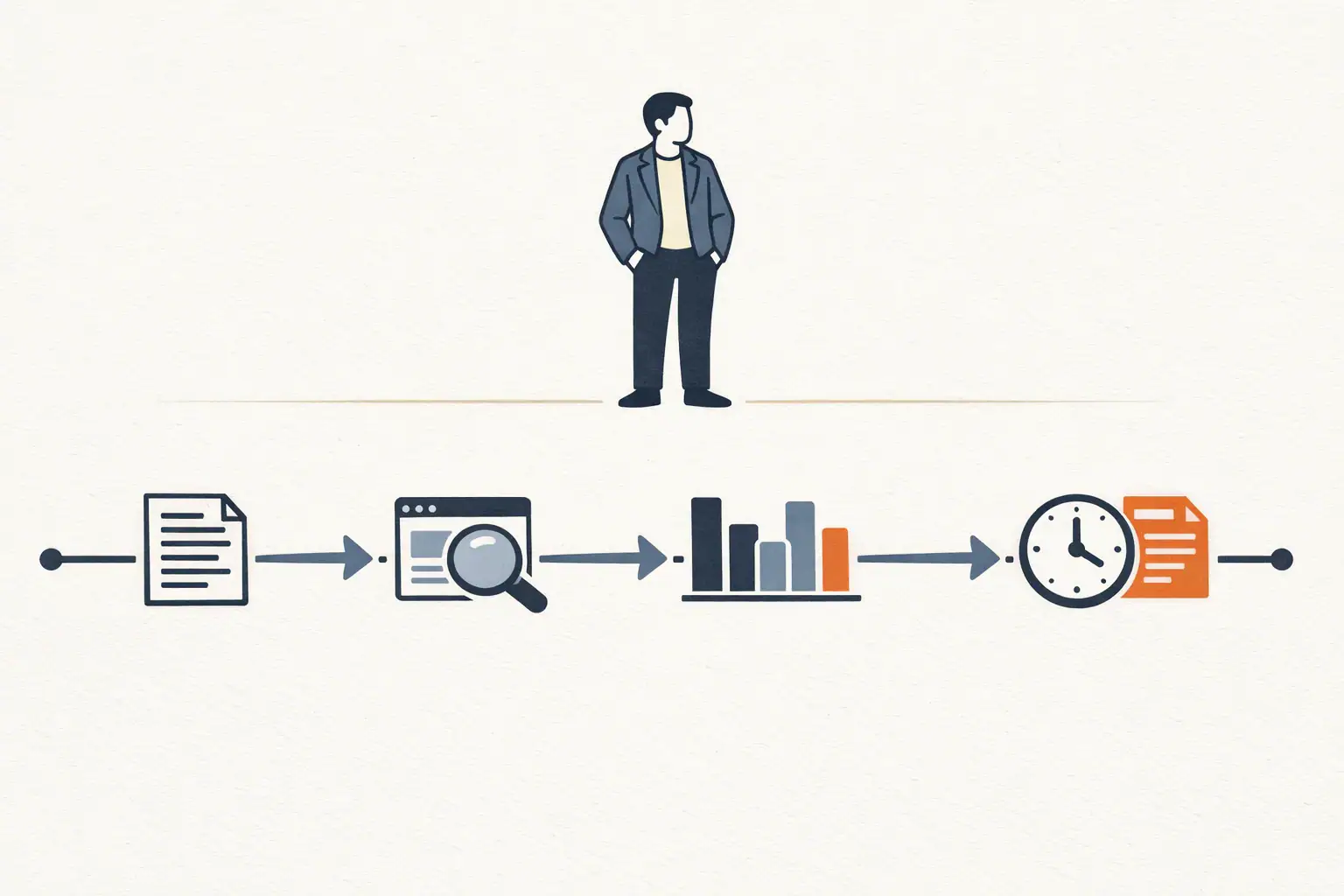
If we were setting Hermes up for our own consulting practice, we’d run this sequence:
Week 1. Install Hermes (the setup guide covers it). Connect one model provider. Enable web, file, and browser tools. Don’t enable cron or messaging gateways yet. Run the Workflow 1 (discovery synthesis) prompt against a recent call transcript. Review.
Week 2. Build a Hermes skill out of your audit checklist. Run it on one client website. Compare the output to what you’d have produced manually. Note where Hermes saved time, where it missed nuance, where it invented things.
Week 3. Add the competitor-teardown workflow. Run it against three competitors of one current client. Use the output as input to the next strategy session, not as the strategy.
Week 4. Add the recurring-reporting workflow on a cron schedule. Set it to drop a draft report into a folder every Friday at 2pm. Edit it Friday afternoon, send Monday.
By month two you have four reusable consulting workflows. The compounding starts when each new client gets the benefit of all of them on day one instead of starting from zero.
The best consultant use case: better leverage, not less thinking
The weak version of AI consulting is sending generic AI-written documents to clients.
The strong version is using AI to clear the repetitive work so the consultant can spend more time on judgment.
Hermes can help consultants move faster through research, synthesis, drafting, and reporting. It can also make small consulting teams look much larger operationally. But it shouldn’t replace the consultant’s point of view.
For the broader build-versus-hire question on whether to do this kind of work in-house or with consulting help, our piece on AI automation agency vs Hermes Agent covers it directly.
If you want help building an AI-assisted consulting or marketing workflow, our services page explains how we work. You can get in touch here.
FAQ
What’s the realistic time savings for a consultant who installs Hermes? The first week feels worse than not having it because of the setup curve. By week three to four, most consultants we’ve watched report 30-50% time savings on research, synthesis, and first-draft work. Reporting compounds the most because it runs every week forever.
Should I use Hermes for client-facing deliverables or only internal work? Start with internal work: research synthesis, audit prep, draft memos for your own review. Add client-facing deliverables only after you trust the output and have a review checkpoint that’s reliable. The first time Hermes confidently invents a fact in front of a client is a credibility hit you can’t easily undo.
Can Hermes replace a junior associate? Not in the way the question implies. Hermes can replace some of the mechanical work a junior would handle (audit data pulls, transcript summaries, first-draft memos, weekly report scaffolding). It can’t replace the judgment development a junior gets from doing that work, which is what makes them a senior eventually. Use Hermes to amplify the seniors you have, not to skip building the next ones.
What about client confidentiality? Read your engagement contracts before pasting client data into any model. Many enterprise clients require self-hosted models, regional data residency, or specific approved vendors. Hermes’ open-source nature plus self-hosted VPS deployment makes it easier to meet stricter requirements than most closed AI platforms. But the contractual decision is yours.


